
It’s easy to overpack for a pilgrimage—believe me, I’ve learned from experience! On my first Camino, I carried way too much gear, and it was quite a burden, especially since I had to carry it all on my back. Fortunately, if you join any of our group trips, you’ll have luggage service, so you won’t need to carry everything with you. Even with luggage service, this is not a luxurious trip. We are on pilgrimage, so we are not carrying much “stuff” with us.
For the trips we lead on the Camino, each person is limited to one backpack or one small suitcase weighing no more than 14 kilograms or 30 pounds to manage the luggage for everyone. This is based on the requirements of the luggage services we have used in the past. We encourage everyone to pack light! Whether you have luggage service or not, having one backpack that weighs under 14 kilograms (the lighter, the better!) will help you, as it eases the burden of carrying your luggage day after day.
You may ask yourself, “why is a light suitcase so important?” The short answer has a few parts. (1) the requirements of the transfer company. (2) More importantly, at the end of a long hiking day, you may have to care that suitcase up 2-5 flights of sometimes narrow and steep staircases and then back down in the morning. (3) Pulling suitcases around on old cobblestone is not easy and will tear up heavy suitcases. (4) Rooms in Europe are small and there isn’t much room for large, bulky suitcases. Luggage transfer companies also have size limitations.

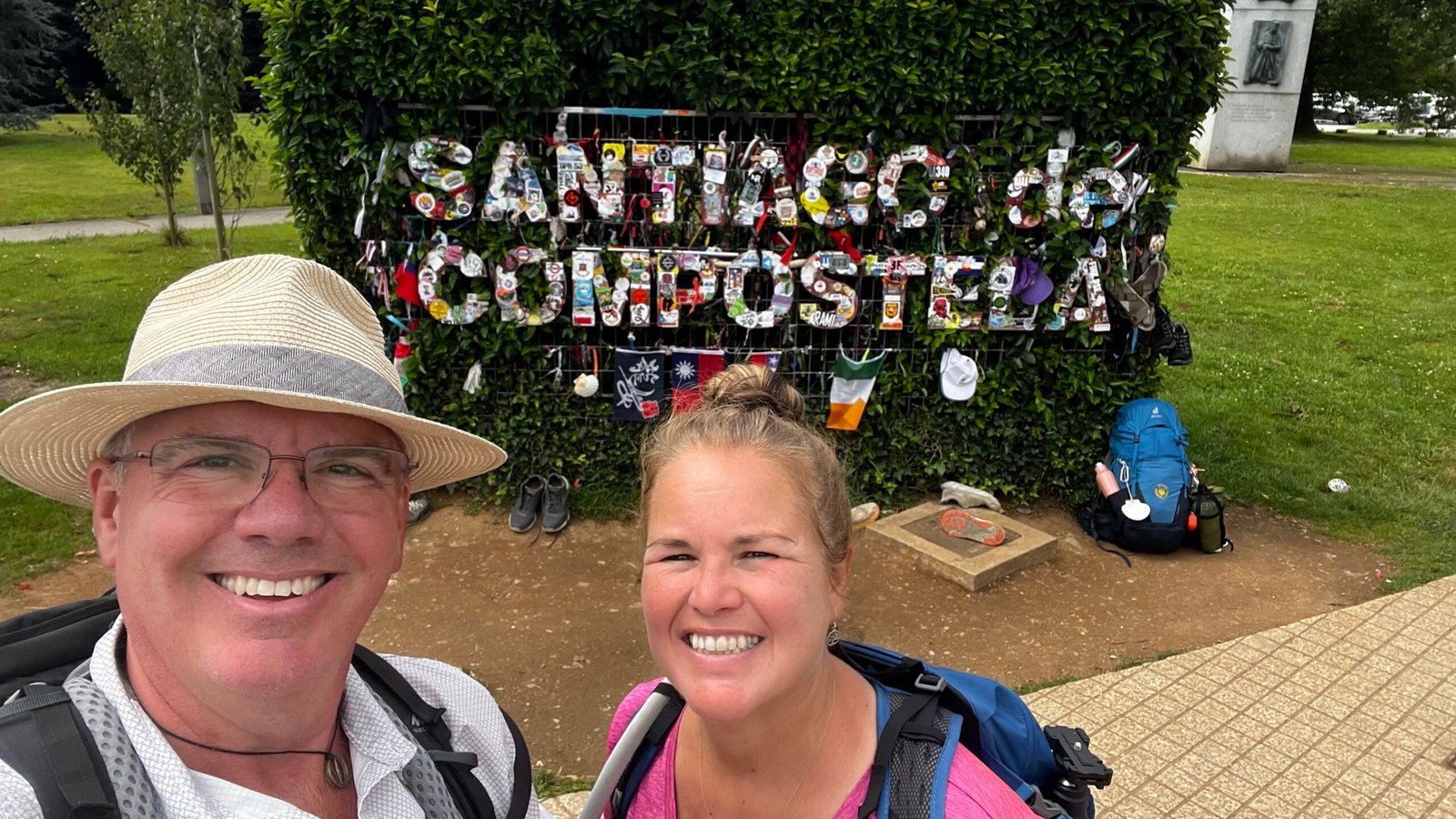
Our two backpacks from our 2019 Camino. This was everything we carried for 2 months in Europe
We believe in the principle of washing and wearing your clothes. What does this mean? It means you are either washing your clothes or wearing them. After hiking for the day, you should shower and wash your clothes. In the evening, you can wear hiking clothes for the next day. Any other clothes would be considered a luxury. You can have luxury items if you keep them in a single backpack or suitcase that weighs under 14 kilograms (30 pounds).
Ultimately, this is your trip. We will never tell you exactly what you “should” or “should not” take with you. This blog post offers suggestions and our perspective. Please feel free to use this information as you see fit.
This is our suggested packing list for the Camino.
If you are traveling on a group trip with us, you will receive a packing list that is specifically for our groups.
Where there are differences between Brian and me, Michelle, we have identified them. These are just suggestions. You have to pack what you feel is best for you! Also, where we travel, you will be able to find what you need in local shops (band-aids, hiking poles, ibuprofen, snacks, etc)
- Toiletries: toothbrush, soap to wash clothes and body, shampoo, nail clippers, tweezers, comb, hair ties, etc. Some type of washcloth because they don’t use them as we do in the US. Here is the lightweight bag that I carry my toiletries.
- Sunscreen
- A bandana or something to wipe the sweat off your face. I use this towel as my sweat rag and my washcloth in the shower.
- Headlamp if you want to leave before sunrise to walk
- Clothesline: We use something like this, with safety pins to hold our clothes on the line
- A notebook or something like that for journaling, if necessary for you. Don’t bring heavy books; a Kindle is ok.
- Towel: When we take a group trip, the places we stay will provide towels. Some people like to have their own towels. This is Brian’s favorite towel, and this is my favorite towel. We carry a towel because sometimes we stay in places that don’t provide towels (outside of group experiences).
- European plug adaptor
- Portable backpack for evenings to get snacks or groceries or to take your laundry to the laundromat
- Sunglasses with UV protection
- Lightweight Sunglasses Case that clips on your pack.
- A hat: Here is what Brian likes to wear. I have worn my Nike hat but have no particular preferences.
- Merino wool lightweight socks are my favorite brand. I take two pairs, and I always have an extra pair in my daypack, so if my feet are sweating, I can change my socks. If your feet sweat a lot, I would suggest three pairs in case your socks don’t dry overnight. These are the best socks, and we would not suggest any other brand. Since I started wearing these socks and the right-size shoes, I have had minimal blisters.
- Some like sock liners to help prevent blisters. These are what I wear under my socks. I don’t always wear them, but I add them when I feel like my toes need to be separated.
- Hiking shoes—this is quite a debatable conversation. Brian hikes in Chacos all day and wears Croc flip-flops in the evening. I hike in New Balance tennis shoes (a full size larger than my regular tennis shoes). I wear Chacos in the evenings and on shorter walking days. We have hiked in other shoes for many years, but this is what we have hiked in for more than three years. We can talk to you about all of the hiking shoe options, but it’s a decision you have to make. Everyone has different shoe needs. The best thing to remember is that the terrain on the Camino is upwards of 70% stone/gravel, old Roman roads, and lots of cobblestones in Portugal.
- Some like a sun umbrella when they are hiking in the summer. This is our favorite brand because it’s super lightweight
- Lightweight underwear that fits well and has no lace that can rub and irritate the skin and will dry quickly—no cotton underwear! You just need two pairs—remember you are washing and wearing. These are the underwear Brian wears, and this is the underwear I wear. We don’t buy expensive underwear; we just ensure it’s not cotton!
- Bras—ladies, that is up to you! Wear a sports bra during the day and a regular one at night; you decide. I can help if you need ideas. I hate sports bras. I have to pull them over my head because that is hard to do when you are hot and sweaty, so I love this sports bra because it zips up from the front.
- Lightweight jacket for cool evenings or early mornings. Remember, no cotton; this is the brand we prefer to wear.
- Rain jacket: You can make this your lightweight jacket if you want to save space. We love Marmot jackets
- T-shirts: Brian loves button-down shirts, and I prefer t-shirts. Either way, just make sure you are comfortable. Avoid wearing anything tight; you don’t want to feel self-conscious! Some people like tank tops. The problem with tank tops for hiking is (1) the rubbing from your daypack strap and your bare skin can become uncomfortable, and (2) many churches frown on those who don’t have their shoulders covered. You must have your shoulders covered in Italy to go into a church.
- Shawl: Some people like to have a nice shawl with them for cooler nights as a wrap or for churches. In cathedrals in Europe, you typically have to have your shoulders covered inside.
- Pants: Brian likes zip-off pants (no more than two pairs). I like skorts and shorts
- Sleepwear: Brian sleeps in his underwear. I sleep in my evening dress or t-shirt and underwear. People on the Camino are not modest.
- Sleep liner: We travel on Camino in the summer; therefore, a light sleep liner is all we need when sheets are not provided. Sheets will be provided for our group travel experiences. Every albergue we have stayed at has blankets available. However, if you stay somewhere that doesn’t provide sheets, this is our sleep liner. If you are staying in hotels, you won’t need this.
- A swimsuit if you think you might be able to find a place with a swimming pool (on our trips, we always try to find a pool!)
- A swim cap. In Europe, people are required to wear a swim cap in most public pools (we have been required to purchase swim caps at some hotels, but not all). Brian loves this one because it’s comfortable. I love this one because it has room for all of my hair. It’s not waterproof, but it is comfortable, and that’s what I like about it.
- A fly swatter; you will thank me if it’s fly season and you are staying in rooms without A/C or screens on the windows.
- A sink stopper to wash your clothes in the sink. You would be shocked at how many people take or don’t provide a sink stopper.
- Some sort of stain remover pen. If you truly have a limited number of clothes, a stain-removing pen will be a blessing, so you don’t have to live with a stained item.
- Arnica Montana homeopathic medicine. Pills you put under your tongue that melt in your mouth. These pills help with muscle stiffness, cramping, bruising, and swelling. You can take these up to three times a day.
- Anti-chafing cream is a good thing to have if you have parts that rub. Haha!
- We always take a bit of Advil and muscle relaxers (non-drowsy script from the doctor).
In your daypack – If you are not carrying a backpack but rather a suitcase and daypacks, this is the daypack I use and the daypack Brian uses. You can carry something smaller, whatever you are most comfortable using. But ensure you have a way to cover your backpack if it rains. You should have the following at a minimum in your pack:
- Water bottles, a water bladder, or both. We both like carrying a water bladder to drink from while hiking. We also like a water bottle to make a drink with electrolytes or a flavored drink. Water bladders should only contain water to prevent mold or bacteria from forming.
- Water bladder cleaning tab. For a trip that is two weeks or less, you just need one tab to clean your bladder halfway through your trip
- Electrolytes. If you are feeling dehydrated, overheated, weak, or sluggish, drinking electrolytes will help. I love this brand of Salt Sticks for quick relief, and this brand for putting in my water bottle.
- Snacks. We find snacks at a local grocery store and only buy what we might want the next day. This can be fruit, trail mix, chips, etc. Whatever makes you happy, but you don’t need to bring snacks from home.
- You should bring a few toiletries, such as tissues, toilet paper (yes, some places will have toilets without paper!), and maybe ibuprofen.
- You could also consider a small notebook if you like to journal with pen and paper or give your number to someone you meet along the way.
- Your cell phone charger, if you think you will need it during the day
- Your pilgrim shell should be attached to your daypack, as this identifies you as a pilgrim to other people
- Bring a fanny pack with your essentials. This includes your pilgrim’s passport (also called a credential), your US passport, and money for the day.
- A hat or a sun umbrella
- Some sort of stain remover pen. If you truly have a limited number of clothes, a stain-removing pen will be a blessing, so you don’t have to live with a stained item. Have one in your suitcase and one in your daypack unless you are using just a backpack.
AirTags: Be sure to place AirTags (for iPhone) or Tile Tags (for Android) in everything from your suitcase to your daypack and even your fanny pack. It might seem like overkill, but you never know when you might misplace something, and you’ll be glad you have your AirTags!
ATM’s and Credit Cards: You will find plenty of ATMs along the way. We carry a Charles Schwab card for our ATM transactions. CS reimburses your ATM charges; they don’t charge any ATM fees, and there are no upcharges for rate conversions. For your credit card, most stores and restaurants accept tap pay, so just make sure you can tap with your phone. The credit card that you have associated with the card should be one that does not charge international fees. For example, the Chase Sapphire Preferred, REI credit card, etc. If you don’t use the correct card, you will be charged 3% on each transaction.
Should I pay in US dollars or the foreign currency (euros, pounds, etc)? Always pay in the currency of the country you are in. If you don’t, the company will add a currency conversion fee. Please watch those card machines and never pay in US dollars unless you are in the US!
What type of SIM card do I need for my phone? We used to use Orange eSIM cards when we traveled abroad; however, we currently have an international Verizon cell plan. Choosing a phone plan involves several considerations. Contact us if you have questions about phone plans and traveling abroad.
If we have forgotten to include something on the list or if you have any questions, please drop us an email.
Thanks for reading! – Michelle
0 Comments